Robotic hip and knee replacement in Athens

Robotic Knee & Hip Arthroplasty
Robotic arthroplasty is the modern evolution of orthopedic surgery.
With the help of digital mapping and exceptional precision, it offers personalized results, less pain and faster recovery.
Dr. Stavros Alevrogiannis , Director of Robotic Orthopedics at Metropolitan General, applies the exclusive Matrix AI technology , integrated digital technology in Arthroplasty.
3 basic stages of implementation:
• Preoperative check-up & planning (VR)
• Robotically assisted surgical procedure
• Postoperative check-up & rehabilitation
What is robotic arthroplasty?
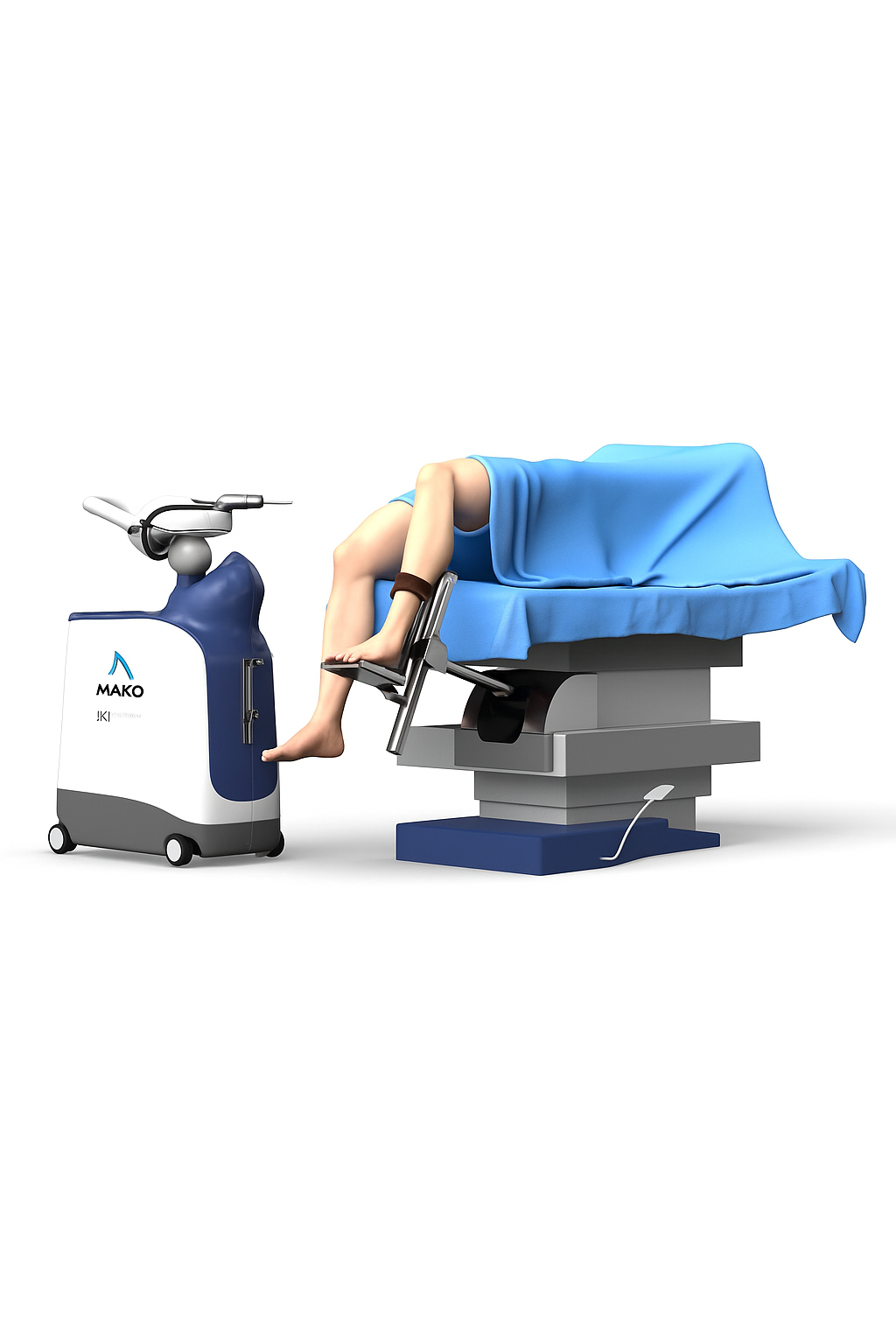
Robotic arthroplasty is a procedure in which the surgeon uses a robotic guidance system to achieve precise placement of the prosthesis in the knee or hip.
The system maps the patient’s joint in three dimensions and determines the surgeon’s movements with millimeter precision.

Advantages of the robotic method
The application of robotics/Matrix Arthroplasty offers:
Precision in implant placement → better stability & lifespan.
Less postoperative pain → thanks to limited surgical trauma and smaller incisions.
Faster recovery → mobilization from the first day, short hospitalization. Faster rehabilitation and return to daily activities
Personalization → each implant is adapted to the patient’s body with 3D design.
Reduced complications → greater long-term durability.
When is robotic arthroplasty indicated?
The method is indicated in cases of osteoarthritis, rheumatoid arthritis or traumatic joint damage, when conservative treatments no longer work.
Dr. Stavros Alevrogiannis individually evaluates each patient and suggests the optimal technique, aiming for maximum functional results.
Recovery
Recovery after robotic arthroplasty is faster than with traditional methods. Most patients are walking from the first day and returning to their activities within a few weeks.
What robotic assistance means in joint replacement
Robotic arthroplasty describes the use of technological tools in planning and performing a joint replacement operation. The surgeon remains responsible for the decisions and for control of the procedure. For a patient, the useful question is which particular part of the proposed plan the technology supports. Different systems may collect and use information in different ways. Your discussion therefore needs to address the application being proposed, the investigations it requires and its place within your overall care. A procedure name alone does not explain why an operation is indicated, what rehabilitation involves or which difficulties may need to be managed in your individual circumstances.
Suitability for surgery comes before the choice of technology
Knee or hip pain does not automatically mean that a joint replacement, robotic or conventional, is necessary. The cause of the symptoms, joint function and impact on daily life need assessment first. Explain what has changed in your walking, sleep, work and the activities you value. Previous treatments also matter: what you tried, how long you followed the plan and what effect it had. This information helps determine whether further non-surgical care is appropriate or whether there is a reason to consider replacement. The choice of a supporting tool follows that clinical decision. It does not establish the diagnosis or make an operation suitable by itself.
Turning investigations into an individual surgical plan
Planning connects imaging information with the anatomy and functional needs of the joint. Technological assistance may provide measurements and checking tools that the surgeon can use during that process. Whether additional imaging is needed depends on the system, your circumstances and the selected protocol. Arranging investigations yourself because they were used for somebody else's procedure may not be helpful. Ask which examination is being requested, what question it is intended to answer and whether existing images can be used. Understanding these points makes the next step clearer and helps avoid unnecessary repetition or comparisons between investigations that were performed for different purposes.
Knee and hip replacement have different planning requirements
The general term arthroplasty includes procedures involving different joints. In the knee, the discussion may focus on alignment, stability and movement. Hip planning involves a different anatomical and functional setting. Information should therefore refer to the joint being treated and the specific proposal. The separate page about robotic knee replacement develops the knee-focused discussion. For the wider decision about replacing a knee or hip joint, see the arthroplasty page. Following these related topics can help you distinguish the underlying condition, the proposed operation and the technological tool used to assist it. They are connected subjects, but they answer different patient questions.
Discussing MATRIX in understandable terms
The website presents MATRIX in connection with digital planning for arthroplasty. During your own consultation, the important point is to understand what the proposed application includes: which information is used, how the plan is presented and which steps it influences. The MATRIX interview provides the context in which the approach is discussed on this website. You can ask how that presentation relates to your diagnosis. The use of digital information alone does not describe an individual benefit or guarantee an outcome. An explanation becomes more useful when it addresses the actual questions, limitations and objectives involved in your proposed treatment.
The surgeon and the wider team
Experience, training and cooperation within the team remain important parts of the discussion. You can read Dr. Stavros Alevrogiannis' profile and the Master Surgeon presentation, then raise practical questions about the care being proposed. Who will explain the arrangements before surgery, who coordinates rehabilitation and who responds to questions afterwards? Clearly identifying these roles makes the plan easier to follow. A certification or a technological system does not remove the need for an individual assessment, an explanation of risks and organized follow-up. Your understanding of the care pathway matters alongside the details of the operation and the equipment used to assist the surgeon.
Expectations that can be discussed and assessed
Before deciding, describe what you would regard as a meaningful improvement: walking farther, moving around the house more easily, managing work with fewer limitations or completing familiar daily tasks. These goals make the consultation more concrete. Precision in planning and the recovery experienced by a patient are different aspects of assessment. Ask what can reasonably be evaluated before surgery and what will be monitored during rehabilitation. Other people's experiences may help you identify questions to ask. They cannot precisely predict your own pain, stamina or return to activity. The discussion needs to connect the technical proposal with your personal goals while keeping the remaining uncertainties clear.
Preparing for the day of surgery
Hospital arrangements should include admission instructions, preoperative checks and assessment by the anesthesia team. Make sure you understand which documents and investigations to bring and which instructions apply to your medicines. Changes to medication require medical guidance. The arrival time and admission process should be confirmed by the team and hospital. Mention additional health conditions or practical travel difficulties early enough for them to be considered. Good organization supports the application of an individual care plan; it does not replace individual assessment. Keeping the instructions together, and asking for anything unclear to be explained, can make the preparations easier for both you and your companion.
Rehabilitation after robotic joint replacement
Using a robotic tool does not make rehabilitation unnecessary. Postoperative care still involves mobilization, exercise, pain management and assessment of function. The programme is adapted to the joint, the operation and your general condition. Walking aids and progression of weight bearing should follow your specific instructions. Ask for a demonstration if you do not understand an exercise. Stairs at home, physically demanding work or responsibility for caring for another person also need discussion. A treatment plan needs to be workable after you return home. It should describe what support is available and how the team will assess progress, rather than assuming that the same routine will suit every patient.
Hospital stay and return to everyday activities
Information about a short hospital stay or early walking needs personal context. Leaving hospital and fully returning to everyday activities are different stages. Discharge depends on the relevant medical and functional requirements, while the later return to activities depends on recovery and on the demands of each task. Ask how these requirements will be assessed and what help you may need. Driving, working and returning to sport should be considered separately. Keep your own written instructions and do not treat a general statement about a number of days as permission to resume a particular activity. Your team's advice should reflect how your recovery is actually progressing.
Robotic arthroplasty costs: comparing equivalent proposals
To compare two estimates, first establish whether they describe the same operation and the same services. Ask for the included materials, hospital charges, medical team fees and any separate charge for technological support to be identified. Clarify which follow-up appointments are included and which rehabilitation expenses need to be arranged independently. If you have insurance, confirm how it applies to the specific proposal. Financial information is discussed after clinical assessment so that the estimate relates to a real plan of care. No universal price or unverified price range is presented for all patients. Understanding what is included is essential before comparing the final figures.
Follow-up continues after discharge
Before leaving hospital, establish when the next review is planned, how you should update the team about your progress and which symptoms require prompt contact. The digital postoperative monitoring options presented on the website can be discussed as part of the communication arrangements. They do not replace an examination or emergency care when either is needed. New breathlessness or chest pain requires emergency medical assistance. For concerns about the wound, pain or movement, follow the instructions supplied by the team responsible for your care. A clear contact route is useful only when you also understand when to use it and when to seek urgent help.
An Athens consultation and practical travel arrangements
An assessment for robotic arthroplasty in Athens can be arranged using the details on the contact page. The listed service location is Metropolitan General, 264 Mesogeion Avenue, Cholargos. Confirm the exact meeting location before setting out. If you are travelling from another area, ask whether the initial assessment and any further investigations can be coordinated within the same journey. Bring previous imaging, medical reports and a short account of the treatments you have tried. Preparation allows the appointment to focus on the central questions: whether surgery is indicated, which approach is being proposed and how care can be organized around your individual needs.
Information about the role of technology: AAOS: robotic-assisted joint replacement and AAHKS: computer-assisted hip surgery.
Why choose Dr. Stavros Alevrogiannis
Director of the Robotic Orthopedic Knee & Hip Surgery Clinic, Metropolitan General .
Master Surgeon Certification in Joint Replacement .
Training in international centers (MAKO, Matrix, AR).
Fast-Track / Enhanced Recovery protocols for less pain & faster recovery.
Specialization in robotic orthopedic surgery
International certifications and many years of experience
Personalized treatment plan
Scientific validity and human approach
Process – From assessment to rehabilitation
Preoperative evaluation → medical history, imaging tests, digital planning.
3D simulation → creation of a 3D joint model.
Robotic / AR guided intervention → minimal incisions, millimeter accuracy.
Postoperative rehabilitation → rapid mobilization, physiotherapy and continuous monitoring.

Cutting-edge Technology – MATRIX AI
Matrix AI is the integrated digital technology in arthroplasty, applied exclusively by Dr. Alevrogiannis in Greece.
The 3 basic stages of MATRIX AI
Preoperative simulation → 3D model with AI for perfect design.
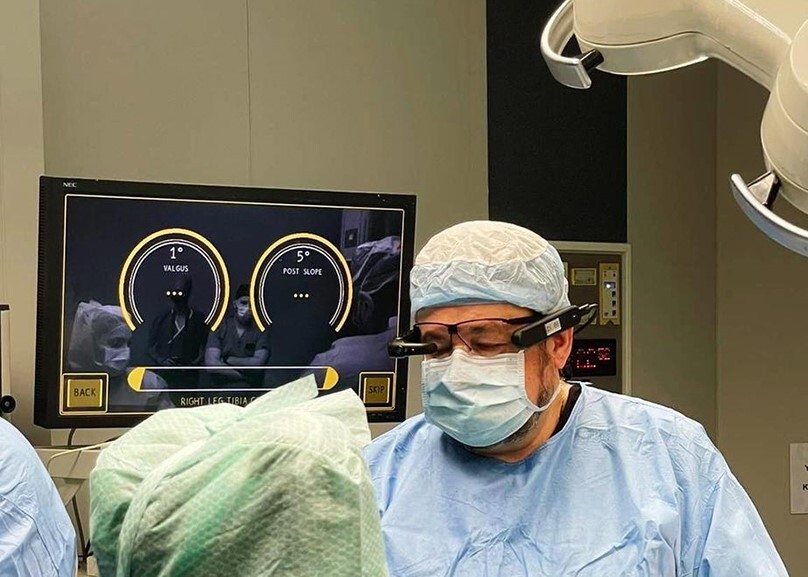
Intraoperative guidance with AR → augmented reality for alignment & balance.
Personalized rehabilitation → fast-track protocols based on surgical data.
Matrix AI combines artificial intelligence, AR, and surgeon experience for superior results.
Related articles about robotic arthroplasty
Frequently Asked Questions (FAQ)
Robotic arthroplasty is a minimally invasive technique that allows the surgeon to place the prosthesis with millimeter precision, reducing pain and complications.
The robotic technique offers greater precision, minimal pain, a shorter hospital stay and faster recovery.
The choice depends on the stage of joint wear and the patient's general health. Dr. Alevrogiannis assesses each case individually.
Most patients walk from the first day and recover fully within 4–6 weeks.
Operations are performed at Metropolitan General, fully equipped with the latest robotic systems.
Small incisions, regional anesthesia and modern protocols significantly reduce pain.
Usually on the same or the following day, with the help of a physiotherapist.
With modern implants and precise placement, their lifespan exceeds two decades.
Make an Appointment / Contact
Prepare for the orthopedic assessment
If knee or hip pain is limiting your daily activities, note which movements are difficult for you and which treatments you have already tried. Bring previous tests and an up-to-date list of medications with you. The choice of surgery and rehabilitation plan are discussed based on the findings and your overall health.
The evaluation in Athens is connected to Metropolitan General, at 264 Mesogeion Avenue, in Cholargos. To arrange a visit from Lamia or Cyprus, please consult the existing contact details . Also read about walking after knee replacement and discuss with the surgeon which timetable suits your case.

THE PATIENT IS AT THE CENTER
Collaboration & Support, Our Basic Principles