Knee and hip replacement in Athens
Knee & Hip Arthroplasty – Dr. Stavros Alevrogiannis
Arthroplasty is one of the most common and effective procedures in modern orthopedics.
It involves replacing worn joint surfaces of the knee or hip with artificial prostheses (implants) that restore movement and eliminate pain.
Dr. Stavros Alevrogiannis , a Specialized Orthopedic Surgeon with many years of experience in Greece and abroad, applies modern arthroplasty techniques with an emphasis on precision, safety and rapid recovery.
What is Knee Arthroplasty?
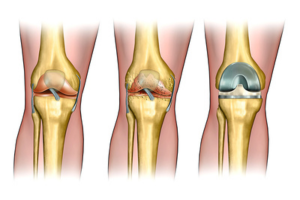
Knee arthroplasty is indicated when the joint has suffered severe damage from osteoarthritis , rheumatoid arthritis , or injury .
During the operation, the surgeon removes the damaged bone surfaces and places an artificial implant that mimics the normal movement of the knee.
Modern technology allows:
Smaller incisions
Precise implant placement
Reduced postoperative pain
Faster mobilization
What is Hip Arthroplasty?
Hip arthroplasty aims to replace the worn out femoral head and acetabulum with biocompatible implants.
The procedure offers dramatic improvements in mobility and quality of life for patients suffering from chronic hip pain.
Dr. Alevrogiannis uses minimally invasive techniques (MIS) that allow for faster recovery
MATRIX Arthroplasty with Artificial Intelligence (AI)
The Orthopedic Knee & Hip Robotic Surgery Clinic , based at the Metropolitan General Hospital in Athens, with Director Dr. Stavros Alevrogiannis, presents for the first time in Greece the new philosophy in large joint arthroplasty: MATRIX arthroplasty.
Innovation in Arthroplasty with AI
Dr. Stavros Alevrogiannis, a select member of the European Knee Associates (EKA) team, introduces the new MATRIX Arthroplasty philosophy to Greece, based entirely on the use of Artificial Intelligence (AI).
The goal is to establish a completely innovative workflow in knee, hip and shoulder replacement, in response to the rapid increase in arthroplasty over the next 20 years.


Knee and hip replacement in Athens: making an informed decision
A search for joint replacement often starts with a very practical difficulty: a walk that has become shorter, a staircase you avoid or pain that interrupts your rest. The first consultation needs to connect those difficulties with the actual condition of the joint. A report containing the word arthritis does not explain the whole situation. Your orthopedic surgeon considers movement, walking and everyday function, the treatments you have already tried and the activities that matter to you. This gives a possible knee or hip replacement a clear purpose, rather than making the decision solely on the basis of age or an X-ray.
Describe the symptoms that affect your daily life
With a knee problem, you may notice pain when getting out of a chair, difficulty on stairs, stiffness or a reduction in the distance you can walk. Hip symptoms may become noticeable around the groin or thigh, or during movements such as putting on shoes and socks. These descriptions help the assessment, but they are not a diagnosis. Similar symptoms can have different causes. Note when the discomfort appears, what makes it worse and what provides relief. Mention pain at night, the use of a walking aid and any activities you have stopped. Concrete examples help the consultation focus on the changes you are experiencing.
The examination and your previous medical history
An orthopedic assessment brings together a discussion, examination of the joint and review of the available imaging. Whether further investigations are needed depends on the findings and your history. Bring previous medical reports, the actual examination images and a list of your medicines. Previous operations, infections, allergies and conditions monitored by other doctors are relevant to planning. An older investigation may provide a useful comparison, while a recent written report does not always replace a review of the images themselves. Organizing this information helps the doctor explain what is known, what still needs clarification and how the proposed treatment addresses the problem.
Treatment options before joint replacement
A discussion about arthroplasty also includes appropriate alternatives. Depending on your circumstances, these may involve changes to activity, targeted exercise, physiotherapy, walking support or medicines prescribed with medical guidance. The aim is to identify what may realistically help, what has already been attempted and how its effect will be assessed. Repeating a treatment without a clear objective is not the same as following a planned course of care. Do not change your medicines on your own. Biological therapies require their own assessment and should not be regarded as an automatic substitute for an indicated replacement. The comparison concerns your particular joint and the nature and stage of its damage.
Questions specific to knee replacement
When the knee is the main concern, ask which parts of the joint are affected and how this relates to movement and stability. The proposed type of replacement and the reasons for that choice should be explained. The name of a technique does not describe the entire care plan: planning, implant selection, possible difficulties and rehabilitation all need attention. If you are interested in robotic knee replacement, this discussion belongs within the assessment of your suitability for surgery. It does not take the place of diagnosis. Understanding what the team is trying to achieve in your knee is more useful than comparing procedure names without that context.
Planning when the problem involves the hip
Hip replacement has its own planning and functional preparation requirements. Relevant everyday tasks may include standing up, getting into a car, dressing and moving around your home. Tell the doctor about earlier injuries or operations in the area and any changes you notice in your walking pattern. Instructions after surgery depend on the approach, operative findings and overall care plan. Restrictions or exercises prescribed for another patient are not automatically suitable for you. Ask for clear written guidance about movement, walking aids and the gradual progression of normal activities. This helps you distinguish your individual instructions from general information you may have read elsewhere.
Preparing for surgery in a practical way
If surgery is agreed, the necessary preoperative checks and assessment by the anesthesia team are arranged. Instructions about medicines, fasting and any additional specialist appointments are individualized. Bring a complete medication list, including supplements or products you take only occasionally. Discuss who will accompany you, how you will travel home and what support will be available during the first days. Preparation also involves keeping a clear route through your home, placing everyday items within easy reach and considering how stairs will be managed. These details turn a general recommendation into a plan that can be followed in your actual living environment.
Recovery after arthroplasty: functional goals at each stage
Rehabilitation is organized around practical goals: safe movement, pain management, gradual exercise and increasing independence. The team responsible for your care decides when and how much you should walk. Early mobilization does not mean unlimited activity or an identical recovery pathway for every patient. Follow your individual instructions about weight bearing and walking aids. Later assessments consider walking, joint function and your ability to manage everyday tasks. The article about walking after knee replacement provides a useful starting point for discussion. It does not replace the specific postoperative instructions given to you by your surgical and rehabilitation team.
Physiotherapy, work and returning to familiar activities
Physiotherapy connects the surgeon's instructions with the functions you need in daily life. If an exercise worries you or you are unsure how to perform it, ask for a demonstration and clarification. Returning to work depends partly on whether your job involves sitting, standing, driving or lifting. Describe the real demands of your working day so that advice can be specific. Driving and returning to sport require separate consideration. A milestone mentioned by another patient is not personal permission to resume the same activity. Progress should be judged in relation to safety, function and the development of healing, rather than by a date in isolation.
The cost of knee or hip replacement
Meaningful financial information needs to refer to the particular treatment plan being proposed. Ask whether an estimate includes hospital charges, the implant and other materials, the medical team's fees, preoperative investigations and postoperative follow-up. Physiotherapy, walking aids and services that may be needed after discharge should be clarified separately. Any contribution from an insurer or an individual insurance policy needs confirmation for your own circumstances. There is no single published price here that can describe every patient and every procedure. A written explanation of what is included makes an estimate easier to understand than a headline figure without details or a clear description of the proposed care.
Risks, follow-up and contacting the team
An informed decision includes discussion of potential risks such as infection, blood clots, stiffness and problems that may need further treatment. Their likelihood and significance are not identical for all patients. Before discharge, make sure you know which symptoms require contact, which telephone number to use and how follow-up will be arranged. New breathlessness or chest pain requires emergency medical assistance. For changes to the wound, fever, increasing pain or unusual swelling, follow the team's contact instructions promptly. A telephone conversation does not replace an examination when an examination is needed. Clear communication arrangements are part of the care plan, alongside the operation itself.
Primary replacement and revision involve different questions
If you already have a knee or hip implant and a new problem has developed, mention this when first arranging the consultation. Assessing a possible revision involves different questions from planning an initial replacement. An operation report, implant information, previous investigations and a timeline of your symptoms can be particularly useful. Pain after an earlier arthroplasty does not automatically mean another operation is necessary. The cause needs investigation before the available options can be compared. This distinction also matters when discussing rehabilitation, hospital arrangements and costs: those discussions should reflect the new, specific plan rather than assumptions based on your original surgery.
Arranging a joint replacement consultation in Athens
The contact page provides the available ways to arrange a consultation with Dr. Stavros Alevrogiannis. The Athens service location is listed at Metropolitan General, 264 Mesogeion Avenue, Cholargos. Confirm the date, time and exact meeting location before travelling. If you will attend with a companion or use a walking aid, mention this when booking. A short list of the difficulties limiting your life, the treatments you have tried and your main questions can help you make effective use of the appointment. The aim is to leave with an understandable explanation of your options and clear next steps for your own situation.
Further information: NIAMS: hip replacement and NICE: information and rehabilitation for joint replacement.
How MATRIX Arthroplasty works
Clinical & Imaging Examination → it is confirmed whether the patient is suitable for the method.
- Digital Modeling → 3D model is created and implant selection is made with AI.
- Mixed Reality Demonstration → the patient views the drawing with special mixed reality glasses.
- Adaptation to Anatomy → personalized selection of materials & technique for each individual.
Performing the Intervention
The operation is performed with:
- Latest generation Robotic Systems
- or with special Mixed Reality glasses
The surgery is very quick, almost bloodless, and the patient can get up and walk a few hours later.
Benefits of MATRIX Arthroplasty
- Minimal pain & shorter recovery time
- Ambulatory patient within hours after surgery
- Bionic joint with implant life of over 30 years
- Return home in a few hours or 1–2 days
- Remote postoperative monitoring with “wearable” systems
When is Arthroplasty needed?
The operation is recommended when:
There is severe pain that limits daily activity
Conservative treatments (medications, physical therapy) are ineffective
Is there deformity or stiffness of the joint ?
Quality of life is affected (sleep, walking, stairs)
Why choose Dr. Stavros Alevrogiannis
Experience in hundreds of successful operations
Collaboration with leading clinics in Athens
Applying Fast-Track Recovery techniques
Human, personalized care at every stage
Frequently Asked Questions (FAQ)
What is MATRIX arthroplasty?
It is the new philosophy of arthroplasty based on artificial intelligence and robotics, for personalized and more precise results.
Which joints is it applied to?
In knee, hip and shoulder.
How soon does the patient walk?
In most cases, a few hours after surgery.
What does “Bionic Joint” mean?
It is the personalized joint that adapts to the patient’s morphology, with an implant lifespan that exceeds 30 years.
Is there post-operative monitoring?
Yes, with remote systems that inform the doctor and his team in real time.
Knee, hip and revision arthroplasty
Total knee replacement and total hip replacement involve different joints and different mobility needs. The discussion begins with wear, pain, and functional limitation, along with previous treatments. Robotic arthroplasty and, in particular, robotic knee replacement are presented in separate sections to clarify the role of technology.
Revision arthroplasty involves the evaluation of a previous joint replacement. It requires a different investigation and is not the same as the first surgery. Bring information about previous hospitalization and available tests with you. For the period after surgery, the article on walking after knee replacement is a starting point for information, with personal instructions determined by the surgical team.
If you are organizing a visit from Thessaloniki, Crete, Lamia or Cyprus, confirm the place and time of the appointment through communication . Ask which tests to bring with you, so that the trip can be connected to a comprehensive orthopedic assessment.

THE PATIENT IS AT THE CENTER
Collaboration & Support, Our Basic Principles