Hip labral tear assessment and treatment in Athens
Hip Labral Cartilage Rupture – Symptoms, Diagnosis & Treatment
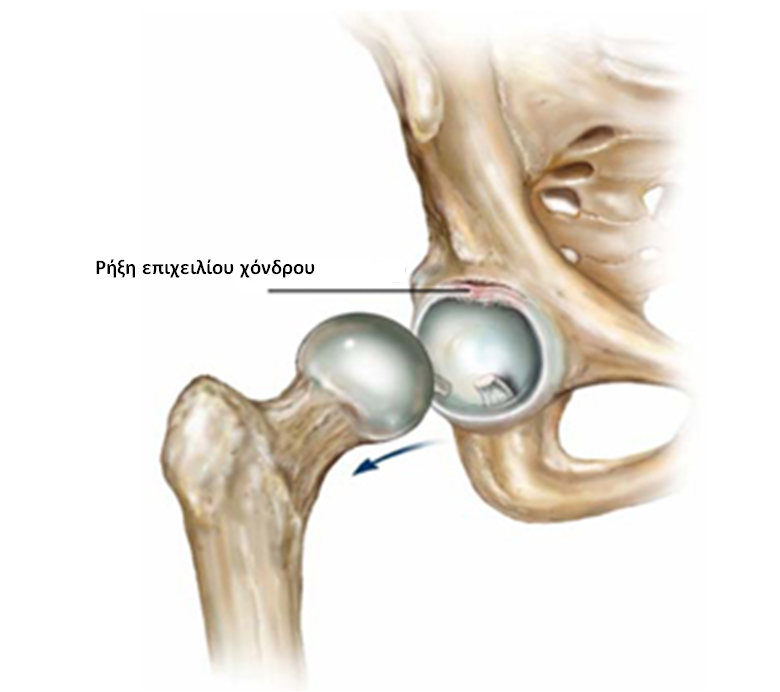
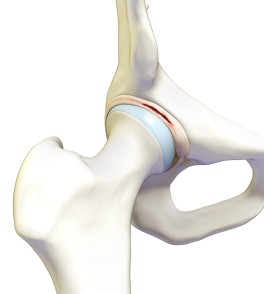
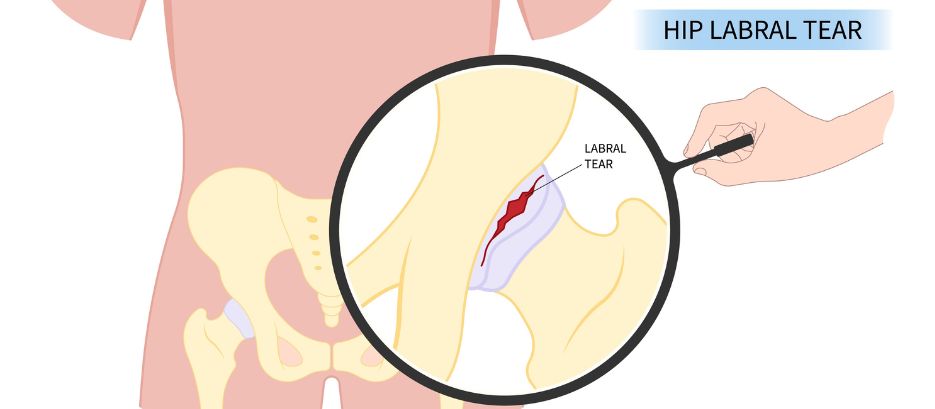
The labral cartilage is a ring of fibrocartilage tissue that surrounds the acetabulum, deepens the socket, and stabilizes the hip joint, evenly distributing loads and lubricating movement. Labral cartilage rupture of the hip
occurs after trauma , repetitive motion , or due to anatomical factors such as FAI (impingement) and hip dysplasia .
Symptoms & Causes
Hip labral tear causes deep groin pain, a “click” or locking sensation, and is aggravated by flexion/rotation. It is often associated with FAI (Cam/Pincer), dysplasia, or repetitive strain.
Symptoms
Deep pain in the groin or outer hip
“Clicking”, noise or blockage during movement
Pain when sitting, climbing stairs, or exercising
Limited bending/rotation, feeling of instability
Decreased performance in athletes
Causes / Factors
FAI (Cam/Pincer) – mechanical impact
Hip dysplasia (shallow acetabulum)
Acute injury / sprain
Repetitive movements (dance, football, martial arts)
Degenerative cartilage lesions
Diagnosis
Diagnosis is based on clinical examination, imaging (MRI/MRA) and, when necessary, diagnostic hip arthroscopy that confirms the rupture and any coexisting lesions (cartilage, FAI).
Treatment – Hip Arthroscopy
Hip labral tear care is chosen after assessment of symptoms, hip shape and overall joint condition. Nonsurgical care and surgical options need discussion for the particular case.
Where appropriately indicated, labral repair or reconstruction with a graft may be considered. Treatment of associated FAI is assessed within the overall plan. The proposed procedure, alternatives and rehabilitation requirements should be explained before a decision.
Restoration
Short protection/charging in the first few weeks
Gradual physical therapy: range of motion → muscle strengthening → proprioception
Return to daily life usually in 4–6 weeks and to sports individually (≈ 3–4 months)
Do you have symptoms consistent with a labral tear of the hip?
Make an appointment for a specialized evaluation: [email protected]
Frequently Asked Questions
Connect a hip labral finding with everyday difficulty
When an investigation reports a hip labral tear, its relationship to pain and limitation needs explanation. An image alone cannot describe every cause of discomfort in the area. Assessment considers symptoms, function and the whole joint before a recommendation is developed. The useful question is not only whether a tear exists, but what it means in the particular situation and what each care option aims to achieve. An understandable explanation supports discussion of treatment and rehabilitation without assuming an operation is inevitable after first reading a report. Ask how the finding relates to the activities you want to perform more comfortably.
Where pain occurs and which positions affect the hip
Describe discomfort in the groin, the side of the hip or elsewhere and whether sitting, walking or turning changes it. Explain what happens when getting into a car, climbing stairs or changing position. If there is a sound or catching sensation, describe exactly what you notice and whether it is painful. This helps more than using a broad label for the hip. Do not repeatedly provoke an uncomfortable movement to confirm it. Examination will assess movement in the appropriate context alongside history and available findings. Mention activities you have reduced or stopped, since that may affect how often symptoms currently occur.
The labrum and the articular surface are different
Cartilage can be used in ways that create confusion about different joint structures. The labrum concerns the rim of the socket, while articular cartilage covers surfaces within the joint. If a report mentions both, ask what has been affected. Discussion of articular cartilage restoration is not identical to discussion of the labrum. A clear distinction helps explain which procedure is proposed and why. It avoids comparing techniques with different purposes, materials and follow-up requirements. You do not need to interpret the anatomy independently, but should be able to understand which part of the hip the proposed plan addresses.
Femoroacetabular impingement and hip shape
If femoroacetabular impingement, or FAI, is mentioned, ask how it relates to symptoms and the labrum. An anatomical term should not be assumed to determine the whole treatment by itself. Hip assessment considers overall shape and joint condition. Dysplasia or another anatomical feature needs explanation before an isolated procedure is discussed. A recommendation should account for the setting in which a lesion occurs, rather than focusing solely on a repair technique. Ask which findings are relevant to the proposed approach and how they influence expectations, rehabilitation and the alternatives that may be suitable.
Organising the diagnostic discussion
Bring images, reports and information about earlier treatment or operations. The doctor will judge which details are needed and whether additional investigation is justified. Ask what each investigation shows and what it cannot decide alone. Mention a new injury or symptom change after an earlier examination. You do not need to arrange MRI or another scan independently before contacting the team. An investigation needs a specific question so that it forms part of an understandable plan and makes use of information already available. Explain what has changed over time, including any period when different activity demands made symptoms less noticeable.
Nonsurgical care: functional aims and monitoring
Care without an operation may be discussed for symptoms and function according to the overall assessment. Improvement in daily life is not the same as anatomically stitching a lesion. Ask for the objectives and expectations to be distinguished. If physiotherapy or activity adjustment is proposed, clear instructions and a review point are needed. Explain what has already been tried and what is difficult to follow. Progress is assessed through real information about movement and daily needs. Not having surgery does not mean having no treatment plan, nor should the same recommendation continue without reassessment if circumstances change. Agree how to seek advice between planned appointments.
A surgical choice requires an identified reason
If hip arthroscopy is discussed, ask which problem it would address and why the proposal is appropriate. Persistent pain contributes to assessment but does not by itself define the procedure. Diagnosis, alternatives, uncertainties and your ability to follow rehabilitation need discussion. If different opinions have been given, keep them together so the actual proposals can be compared. A recommendation should clearly explain its intended objective and limits. Small incisions are not a sufficient explanation of outcome or an easy return. Practical commitments should be considered before deciding so that you understand the whole care pathway rather than only the operating day.
Labral repair and reconstruction
These terms describe different surgical plans. Ask which relates to your situation, what information supports it and which decisions may depend on findings. If a graft is used, its source and role need explanation. You are not expected to select material from online descriptions. You need to understand what will be done and what is required afterwards. Technique, associated procedures and personal progress all relate to rehabilitation instructions. Ask for them to be explained together so you understand the whole treatment rather than its name. Where more than one possibility is discussed, clarify how those possibilities are considered before the procedure.
Clarify the general description of arthroscopic cleaning
The page about arthroscopic hip debridement provides another related information route. In your consultation, establish whether a proposal concerns repair, reconstruction, removal of particular tissue or something else. General words are insufficient for comparison. If widespread arthritis is present, suitability and expectations need a separate assessment. Treating one lesion does not guarantee that every hip symptom will resolve. A precise explanation helps compare alternatives without confusing different operations or objectives. Ask what the proposed procedure can address and which aspects of the overall joint condition may require a different discussion.
Rehabilitation begins with understanding instructions
Before leaving the clinic, you need information about permitted weight bearing, movement and any aids. The programme follows what was performed rather than one instruction for every hip arthroscopy. Discuss stairs, difficulty sitting or other constraints at home so everyday needs can be planned. Ask when physiotherapy begins and who will communicate surgical information to the physiotherapist. Clear communication helps avoid conflicting instructions. A comfortable day is not a reason to increase loading or movement beyond what has been permitted. If guidance is unclear or difficult to apply, contact the responsible team instead of adapting the programme independently.
Sitting, travel and work
Daily life after treatment depends on the demands you need to meet. Describe how long you sit, how much you walk and whether work involves stairs or carrying objects. Request personal driving advice based on function, safe vehicle control and medication. If you travel for treatment, discuss transport and reviews in advance. General estimates for returning to ordinary life do not mean all movements are allowed together. A practical plan distinguishes activities and explains how progression will be assessed. Raise responsibilities at home as well as at work, particularly where another person depends on your mobility or help with physical tasks.
Sport and demanding hip movements
Dance, football and other activities involving rotation or a large range of hip movement have specific demands. Explain which activity you want to resume and at what level. Within sports medicine care, return relates to functional criteria rather than only a calendar. Ask how strength, control and the required movements will be assessed. Comfortable short-distance walking does not establish training readiness. Mention fear or difficulty with a particular stage so it can be discussed within the programme rather than through unplanned tests. Distinguish limited participation from full training and competition when discussing the goal with the team.
Understanding hip labral treatment costs in Athens
A cost estimate depends on the plan and the services included. If there is a surgical indication, request details about hospital charges, professional fees, anaesthesia, materials or grafts where needed and review appointments. Clarify additional procedures and whether physiotherapy or aids are calculated separately. Insurance cover must be confirmed for your case. An arbitrary universal price would equate different operations incorrectly. An estimate should support planning for the whole pathway, including travel and rehabilitation where they create additional needs. Ask which services are arranged separately and how any change to the agreed procedure could affect the financial plan.
Risks and limits of a treatment proposal
Every procedure needs discussion of possible risks and uncertainties. A modern technique does not guarantee identical relief or function for all patients. Ask which symptoms after treatment need prompt contact and how continuing discomfort will be assessed. Further treatment is not decided by comparison with another person's experience; your own course requires assessment. Keep instructions, investigations and review questions together. Continuing care provides an opportunity to discuss what changed, what remains difficult and which next decision is appropriate. Bring practical problems following the plan as well as symptoms, because those difficulties may affect how progress is understood.
Prepare the questions that matter most
A short list can begin with the most likely explanation for symptoms and continue with appropriate alternatives. Add concerns about time away, support at home and reviews. If you want someone to help take notes, arrange that according to your preference. Your own account remains central. Notes do not need to be complete or technical. They should give the team a realistic picture and help you remember the agreed plan without mixing information from different proposals. Leave space for answers and ask for clarification where a general description does not explain what is intended for your particular hip.
Arrange a hip consultation in Cholargos
For an appointment with Dr. Stavros Alevrogiannis, use the contact details. The Athens service point is Metropolitan General, 264 Mesogeion Avenue, Cholargos. Confirm the time, location and available investigations before attending. Bring information about previous treatment or surgery elsewhere where available. The first assessment connects symptoms and findings with an appropriate plan. Treatment, rehabilitation and cost are discussed on that basis, without advance commitment to repair, reconstruction or another particular operation. Explain any travel or support needs when arranging the visit so that practical details are clear before your appointment.
Related background: AAOS: hip arthroscopy and FAI and the hip labrum.
What are the main causes of hip labral cartilage rupture?
Injury, repetitive motions and anatomical factors such as FAI (Cam/Pincer) or hip dysplasia.
How is it treated?
With hip arthroscopy: suturing of the labrum with anchors when the tissue is sufficient or reconstruction with autograft/allograft when it is degenerated. Often combined with FAI correction.
What is the recovery time?
Gradual loading and physical therapy with a return to daily life in 4–6 weeks and to sports generally in 3–4 months, depending on the indication.
The hip is assessed as a whole
The labral cartilage is located on the periphery of the acetabulum and its assessment is related to the overall function of the hip. Describe when the discomfort occurs, whether it is related to sitting or sports, and whether you notice difficulty in bending or rotating. The tests are interpreted in conjunction with this image.
Femoroacetabular impingement is a relevant issue that can be discussed during the checkup. If surgery is being considered, information on hip arthroscopy and arthroscopic debridement helps to understand the difference between the access method and the specific goal of treatment. The decision and rehabilitation are tailored to the findings.

THE PATIENT IS AT THE CENTER
Collaboration & Support, Our Basic Principles