Dr. Stavros Alevrogiannis – Master Surgeon
Master Surgeon Orthopedic – Guarantee of Excellence in Orthopedic Surgery
A knee or hip replacement decision needs information about diagnosis, suitable alternatives and the surgeon providing care. Pain, stiffness and functional difficulty are assessed personally before an operation is proposed.
The Master Surgeon in Joint Replacement designation is awarded by Surgical Review Corporation and forms part of the professional presentation of Dr. Stavros Alevrogiannis. SRC describes accreditation programmes for professionals and care facilities.
Information about the distinction is complemented by discussion of your own plan. Appropriate choice includes understanding the objective, rehabilitation and uncertainties, without a guarantee of identical progress for every patient.

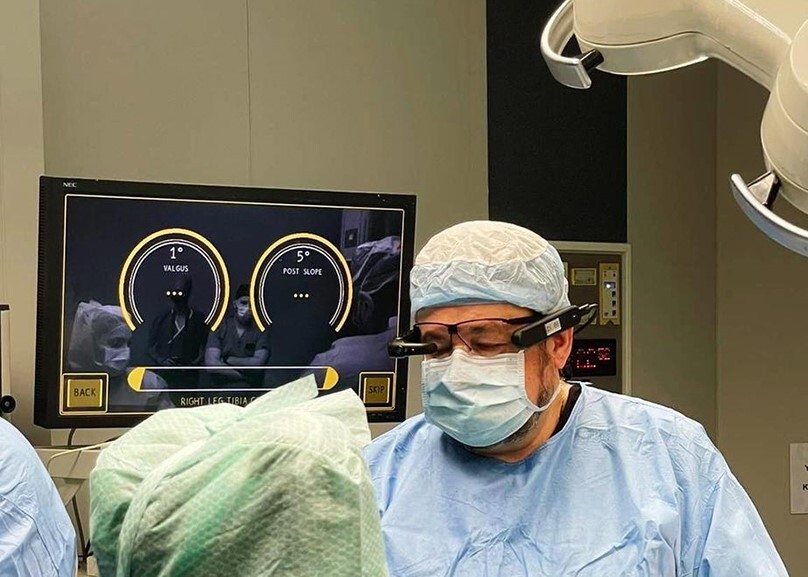
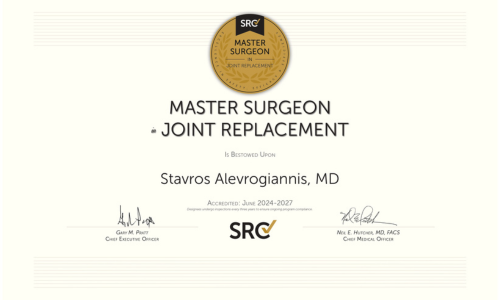

Master Surgeon Orthopedic
Why should I trust him for my total joint replacement?
To obtain this title, someone must meet specific criteria:
- Have extensive experience with a large number of joint replacements per year.
- To present very low complication rates and excellent recovery results
- To implement international safety protocols before, during and after the operation.
- Participate in ongoing training to always be up to date with the latest techniques and technologies.
- Be subject to independent review by other experts and by the SRC organization itself
Dr. Alevrogiannis Stavros - distinguished as the first Greek Orthopedic Surgeon with the title Master Surgeon in Joint Replacement by the Surgical Review Corporation (SRC).

Master Surgeon Orthopaedics means that:
- Information about professional context and the distinction.
- Discussion of experience relevant to your diagnosis.
- Understanding choices, requirements and monitoring.
- Individual assessment of benefit, limitations and risks.

The Master Surgeon distinction when choosing a surgeon
Dr. Stavros Alevrogiannis' presentation includes the Master Surgeon in Joint Replacement designation from Surgical Review Corporation. For someone considering knee or hip replacement, learning about the professional context is one part of preparation. Understanding the diagnosis, alternatives and care requirements is also needed. A distinction can prompt specific questions about experience, organisation and monitoring. The personal decision becomes meaningful when these relate to the findings, function and needs of the person seeking assessment. Ask how the information presented connects with your circumstances rather than assuming a professional title alone determines the appropriate procedure or expected course.
What an accreditation programme considers
SRC describes Master Surgeon as an individual professional accreditation. Its joint replacement programme includes experience, care organisation, patient education and quality assessment. Programme details can change, so the organisation itself is the appropriate source for the current description. At consultation, ask how this organisation of care is reflected in your own pathway. Useful information translates a professional designation into understandable steps without expecting a patient to know accreditation processes or technical terminology. The explanation should help you see how the proposed care is organised and whom to ask about the different stages.
Experience and the outcome relevant to your case
Discussion of experience should relate to the problem you face. A first replacement and assessment of a problem after earlier surgery raise different questions. Explain what happened previously and bring available records. Ask which objective is realistic for your function and what may influence progress. Every medical proposal has limitations and uncertainties. Accreditation is not a personal guarantee of a particular result. Clear information supports expectations based on diagnosis, general health and everyday demands. Bring the activities that matter most to you into this discussion so that an explanation of experience can be connected with the actual plan being considered.
An appropriate operation begins with diagnosis
The knee and hip replacement section presents the context of replacing a joint. An indication needs clinical assessment and discussion of suitable alternatives. Describe pain, stiffness, restricted movement and changes in daily life. Ask how symptoms relate to the findings. Choosing a surgeon and choosing treatment are connected parts of the decision. Learning about the doctor's presentation and distinction is complemented by a personal consultation, where planning can be explained for your circumstances. A useful discussion should identify what treatment aims to change and which limitations or additional care needs may remain.
Robotic technology and MATRIX in planning
Your history and findings provide the starting point for discussing robotically and digitally assisted joint replacement. Ask which system is proposed, what information it contributes and how it is used. MATRIX can be an introduction to the topic, while the final proposal needs specific content. The related presentation and interview offers further material. Possible technological contributions are discussed alongside operative requirements and uncertainty. Ask for an explanation of the role in your own proposed procedure rather than assuming every digital system or operation has identical features, rehabilitation needs or results.
Information that supports an initial assessment
Prepare a brief account of symptom onset and progression. Bring images, reports, earlier operation notes where available and a medication list. If different treatments have been tried, note what helped and for how long. You do not need to know in advance which operation is suitable. Assessment will clarify whether more investigation is needed and which options fit. Mention changes since the last examination. Organised information helps use the appointment without losing relevant details. It also allows the doctor to explain why an earlier finding or recommendation may need to be considered in the context of the current situation.
Discuss goals through everyday examples
Wanting better quality of life becomes more specific when connected with activities. You may want to walk to a nearby destination, climb stairs or manage personal care more comfortably. Another person may prioritise work or exercise. Explain what matters most and ask how it relates to the proposed treatment. Personal priorities do not replace clinical judgment, but provide a useful context. They also help you understand what follow-up will assess and which goals need separate stages. A clear discussion distinguishes an achievable objective from a general hope that every activity will change at the same time.
The care team and coordination
Ask who arranges practical steps, who gives preoperative instructions and how to contact the team afterwards. Hospital care, anaesthetic assessment and rehabilitation belong within the overall plan. A physiotherapist involved in care needs clear information about your instructions. Coordination matters when you live far away or travel is difficult. Raise these needs early so continuity is described practically. Learning about the team helps identify the right contact for different issues. Clarify which decisions require an appointment and how questions between reviews should be raised, rather than relying on assumptions about who will organise the next stage.
Rehabilitation belongs within the larger decision
Before agreeing to surgery, understand the requirements afterwards. Ask about walking, help at home, physiotherapy and reviews. Returning to ordinary use differs from more demanding activity. Read the article about walking after knee replacement and keep questions relevant to you. Instructions are given for your case and reviewed as progress develops. The surgeon's professional distinction sits within the overall care discussion, while understanding the programme supports practical participation. Explain responsibilities at home and work so that the proposed rehabilitation can be discussed in real circumstances rather than as an abstract timetable.
Treatment costs and what an estimate includes
Financial information needs to concern the plan proposed after assessment. Clarify hospital charges, anaesthesia, professional fees, materials and monitoring where relevant. Physiotherapy and aids may need separate arrangements. Confirm insurance contributions and additional travel needs. Comparing estimates is meaningful when services and scope are equivalent. A professional designation does not replace detailed financial information. Ask about expected charges and which changes to the plan would require further clarification. Planning for the whole pathway, including separately arranged rehabilitation, helps you understand practical commitments beyond the operating day and compare proposals on a common basis.
Second opinions and different proposals
Bring earlier recommendations if you have received them. Ask for differences in diagnosis, technique, alternatives and rehabilitation to be explained. Assessment does not need to begin with comparison of titles or broad promises. It needs a shared understanding of the actual problem and clear reasoning for a recommendation. Explain what has already been discussed and what remains unclear. Medical terminology is unnecessary for expressing doubt. Personal information gives questions room and helps you understand the decision before committing to treatment. A new consultation can consider existing information without assuming automatic agreement or disagreement with a previous proposal.
Consent supported by understandable information
Before a planned procedure, you should be able to describe its objective and main next steps in ordinary language. Ask about possible risks, limitations and a course differing from expectations. Request clarification if an answer is unclear. Arrange someone to help record information if that is your preference. The decision remains personal and your own account central. Information becomes more useful when it connects experience, diagnosis and practical requirements, allowing time to discuss daily needs. Keep written instructions and notes together so that subsequent questions can refer to the actual plan agreed rather than memory of several different conversations.
When joint replacement has already been performed
If seeking assessment after an earlier replacement, explain when it was performed and which problem developed. An operation note, earlier X-rays and implant details where available can help the discussion. Considering revision requires a specific diagnosis and does not follow automatically from pain. Ask what information is missing and which investigation is appropriate. Organising the earlier history supports a clear assessment of the present issue. You do not need to remember technical details you were never given; bring available records and describe the changes you noticed. Explain whether symptoms began soon after the operation or after a period of different function, so the team can understand the timeline before discussing possible next steps.
Arrange a scheduled consultation in Athens
For a consultation with Dr. Stavros Alevrogiannis, use the contact details and confirm an appointment at Metropolitan General, 264 Mesogeion Avenue, Cholargos. Explain which joint concerns you and which records are available. The articles and presentations offer additional information about his work and services. Keep questions arising from reading for the consultation. The visit connects information about the surgeon with assessment of your own circumstances and a clear next-step plan. Confirm useful records before travelling, particularly if previous imaging or treatment took place elsewhere.
About the organisation: SRC: accreditation types and Master Surgeon in Joint Replacement programme description.
Care quality and personal information
Total joint replacement is one of the most successful procedures in modern medicine, but its success depends largely on the surgeon.
- Organisation of care before and after the operation.
- Understandable information about the objective and suitable options.
- Discussion of techniques relevant to the particular case.
- A clear monitoring and rehabilitation plan.
- Space for questions and practical patient needs.
Possible outcomes differ between patients. No distinction removes risks or guarantees a particular result.
The distinction within your treatment plan
Learning about a Master Surgeon complements discussion of your circumstances. Ask why joint replacement is proposed, which alternatives exist and what rehabilitation requires. Experience and care organisation belong in your choice alongside understanding limitations and possible risks.
The designation provides professional information. A final decision needs individual assessment and an understandable discussion of expectations, with clear steps before and after treatment.
Frequently Asked Questions
What is the title Master Surgeon Orthopaedics?
It is an international certification of excellence awarded by the Surgical Review Corporation (SRC) to orthopedists with documented experience, high success rates and strict adherence to safety protocols.
What are the criteria for someone to obtain the title of Master Surgeon?
A large number of procedures are required annually, very low complication rates, use of modern techniques, ongoing training and independent review by the SRC.
What are the benefits for the patient?
Choosing a Master Surgeon ensures maximum safety, excellent postoperative results, faster recovery and care in accordance with international quality standards.
Why should I trust a Master Surgeon for my total joint replacement?
Because he has been internationally certified as having the specialization, experience and expertise that reduce risks and increase the chances of an excellent functional outcome.
Contact Us
Contact Us
Certification within the debate about intervention
The Master Surgeon in Joint Replacement designation is for specialization in joint replacement. For a patient considering total knee or hip replacement , learning about the surgeon's experience is part of the preparation. It is equally helpful to discuss the findings, alternative options, and how the treatment relates to daily life.
During the visit, you can ask what the role of robotic and digital technology is in your case, how the hospitalization is organized, and who will undertake the follow-up after the operation. Certification does not eliminate the need for personalized information and realistic discussion of the expected results.

THE PATIENT IS AT THE CENTER
Collaboration & Support, Our Basic Principles